
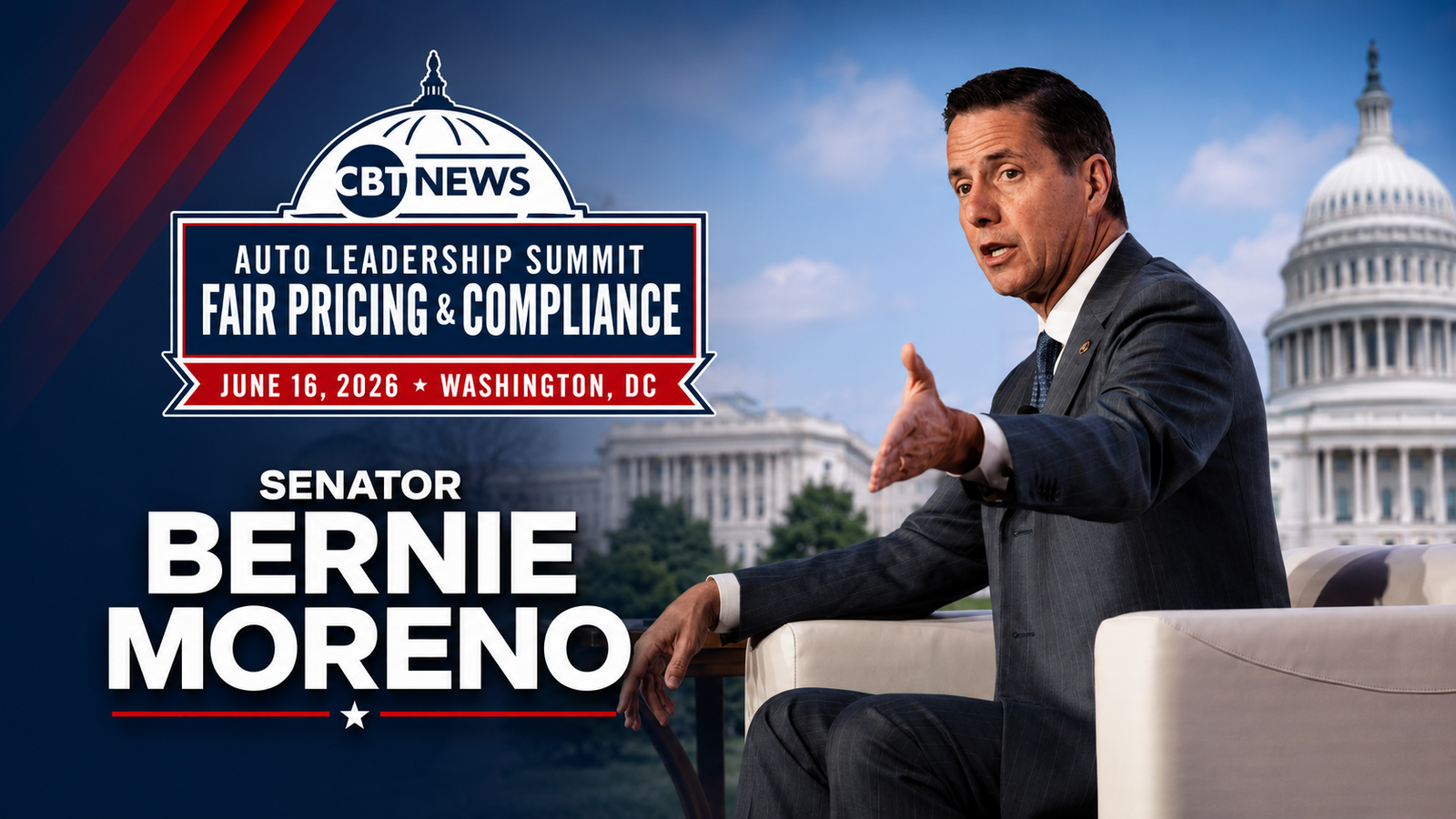
Senator Bernie Moreno did not speak to dealers like an outsider studying the auto industry. He spoke like someone who has lived the business, knows the pressure, and still believes dealers have a responsibility to clean up their own house.
His message at CBT News’ Automotive Leadership Summit was direct: this FTC environment may be the best chance dealers have to address pricing transparency on their own terms.
One Bad Apple Still Hurts the Whole Industry
Moreno was blunt about the industry’s reputation problem. “One bad apple makes the entire industry a problem,” he said.
That line captured much of his message. Dealers who advertise misleading prices do not only create problems for their own customers. They create problems for every dealer trying to compete honestly in the same market.
He pointed to the common frustration of a customer arriving after seeing a competitor’s fake or conditional price. Once the honest dealer starts explaining why that number is not real, the trust battle is already uphill.
Moreno’s view was clear: if a dealership advertises a car, the price should reflect what a customer can actually buy it for, with the doc fee included or clearly placed next to it.
FTC Compliance Can Protect Good Dealers
Moreno made an important distinction. He described the current FTC as one dealers should be able to work with, while also warning that future enforcement could become much heavier if the industry leaves the problem unresolved.
His point was not that dealers should welcome more oversight. It was that dealers have an opportunity to remove the behavior that invites it.
That is where compliance becomes a competitive advantage. If every dealer in a market is playing by the same pricing rules, the customer experience gets cleaner and the honest operators stop getting punished for being honest.
As Moreno put it, the goal is not complicated. When a dealer advertises a vehicle, customers should know what it costs without having to qualify for a stack of conditions they may not meet.
Customers Will Pay for a Better Experience
Moreno also pushed back on the idea that transparent pricing has to mean lower profitability. “What clients are buying today is an experience,” he said.
That tracks with what several speakers said throughout the summit. Customers may not always choose the absolute lowest price if another store offers a clearer, faster, more trustworthy process. Some customers will always chase the final dollar. Most are trying to make a high-stakes purchase without feeling played.
For dealers, that creates room to compete on experience, clarity, speed, people, and trust.
Dealers Should Tell Their Own Story Better
Paul Daly of ASOTU asked Moreno how dealers can stop being on their heels as an industry. Moreno’s answer was to talk more clearly about the value dealerships create in their communities.
He pointed to the jobs dealers provide, the facilities they build, the local organizations they support, and the financial risk they take to represent brands in their markets. His argument was that dealers are some of the best entrepreneurs in America, but the industry often lets old stereotypes do too much talking.
That is not only a PR issue. It is an advocacy issue.
If dealers want policymakers and consumers to understand the value of the franchise system, they have to show it consistently in how they operate and how they communicate.
The Choice in Front of Dealers
Moreno’s message was not soft, but it was optimistic. Dealers can use this moment to raise standards, build trust, and make bad pricing behavior harder to defend. The alternative is waiting for regulators, competitors, customers, or public opinion to force the issue later.
The dealers who move first may get the cleaner process, the stronger reputation, and the better customer conversation. Everyone else may eventually get there too, but arriving late usually costs more.
Last one in’s a rotten egg, and this time the egg might come with a fine.